Skip to main content Go to footer

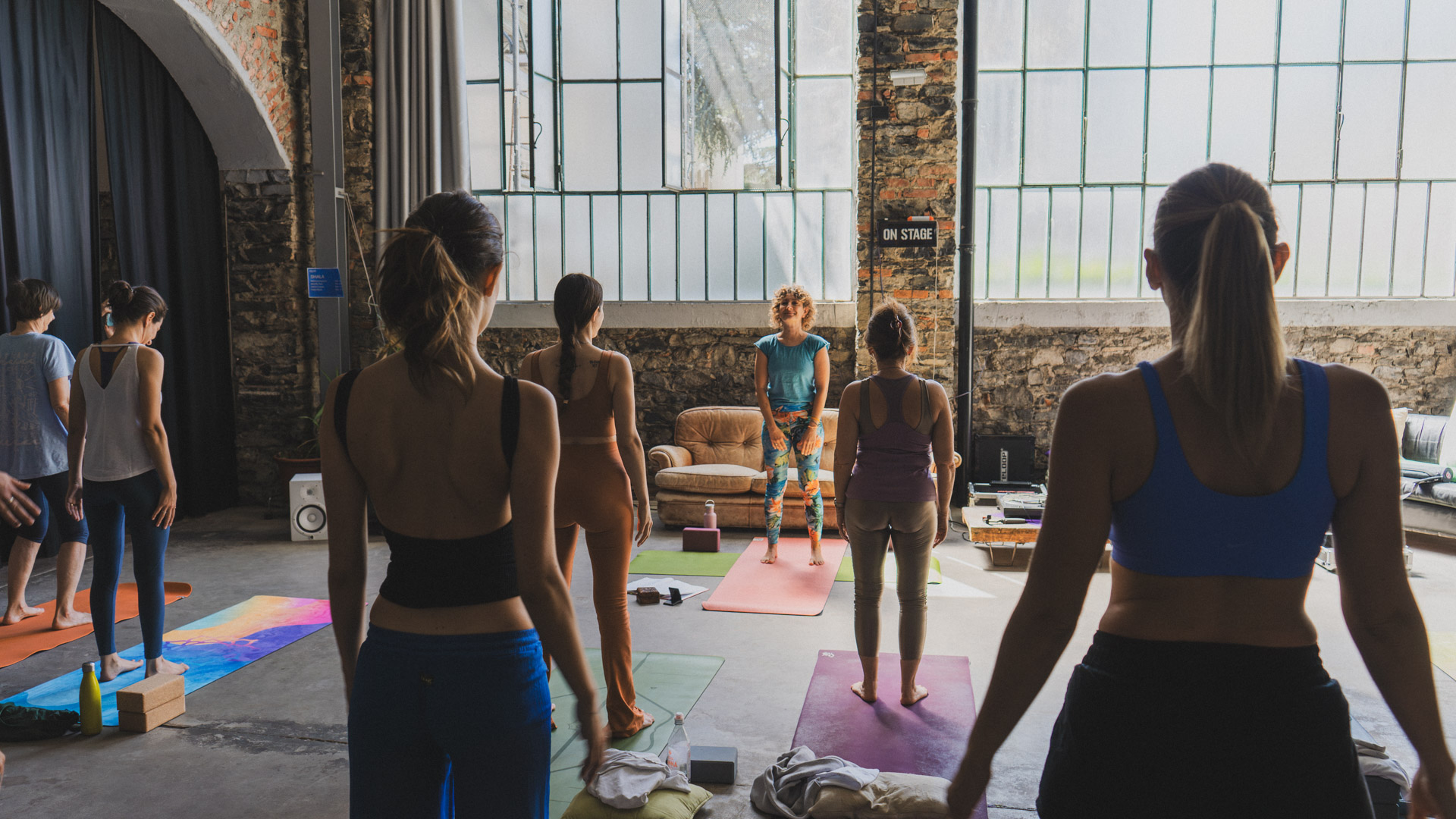
Why does autumn rooting become more natural now, when the light changes and the days get shorter? It's a common phenomenon: during this period it happens more often to feel less stable, a little distracted, feeling like there's less ground beneath our feet. The body notices this before the mind, and reacts by seeking stability.
What is rooting really?
Grounding isn't just a yoga phrase. It's the ability to feel present in the body, here and now, rather than with the mind wandering forward or backward. In physical practice, it translates into simple gestures: feet firmly planted on the ground, weight distributed across both legs, the spine lengthened without tensing. You don't need a complicated posture to feel it: a few minutes of focusing on the contact between your body and the floor, or between your feet and the earth, are enough for those who are still walking along the lakeside before the real cold sets in. Many yoga poses, from mountain pose to chair pose, are born from this very idea: before moving upward, you seek solid support downward.
Because autumn demands it more
In autumn the light changes, the timetables change, the way you organize your day changes. These are small changes, but the the nervous system still perceives them, and sometimes it responds with a diffuse feeling of instability or restlessness, for no specific reason. On the lake, this transition is noticeable earlier than elsewhere: the afternoon light grows shorter, fog rolls in more frequently in the morning, the colors change rapidly on the shores. It's a signal worth heeding, not a problem to be quickly solved. A moment is all it takes to stop and ask yourself what's happening in your body, before rushing to explain it mentally.
How to recognize when it is missing
A few signs, physical before mental, are enough to notice it: the shoulders rising towards the ears for no reason, the thoughts that jump from one activity to another without accomplishing anything, the feeling of always being one step ahead of yourself, never truly in the present moment. These are common signs this time of year, not a symptom to be diagnosed. Small daily gestures are enough to refocus your body, before your mind takes over again.
Three Grounding Practices to Try Every Day
Anyone looking for a simple way to reduce stress this fall, even without yoga experience, can start here.
- Back to the feetStand, barefoot if possible, and focus your attention on the contact between the soles of your feet and the floor for a few moments. Notice the weight distribution, without correcting it, just observing it.
- Slow down a morning gesture. Choose any action—coffee, getting dressed, opening the windows—and do it a little more slowly than usual, without already thinking about the next step.
- Name five things you seeA simple exercise, taken from some grounding techniques: look around and name, even just mentally, five real objects. It helps bring your attention back to the present when your mind wanders elsewhere, whether you're waiting in line, before a meeting, or simply sitting at the table at home.
The body before the mind
Often, it's enough to notice something in your body before looking for a rational explanation: there's no need to immediately understand why you feel less stable during this period. It's the same principle on which every CLYF practice is built: not a concept to be learned by heart, but something to feel before you fully understand itAutumnal grounding doesn't ask us to control change, it only asks us to remain within it with greater stability.
Grounding doesn't require a special occasion to practice: just a few minutes every day, throughout the fall. It can be done at home, before going out, or during a break in the day: you don't need a mat, you don't need a perfect moment. Those who want to experience it in a shared setting, with the guidance of a teacher and Lake Como all around, can also find space in CLYF events.
Frequently asked questions about autumn rooting
Is grounding just a physical practice?
It originates in the body, but also involves attention and mental state: physical gesture is the simplest starting point for accessing it, not the only level involved.
How long does it take to feel the first effects?
It varies from person to person: some notice a difference after just a few minutes of practice, while others need more consistency over time. There's no one-size-fits-all rule.
Can grounding help in times of emotional overload?
Some emotional regulation approaches, such as bioenergetic analysis developed by psychotherapist Alexander Lowen, use grounding techniques to bring attention back to the body during moments of intense arousal. CLYF proposes grounding as a daily mindfulness practice, not a therapeutic approach: for specific difficulties, the primary contact is a mental health professional.
Do you need to be a yoga expert to start?
Autumn grounding is accessible to everyone, even those who have never practiced yoga: all it takes is a few minutes of attention, and no experience or equipment is required.
Continue reading the other articles of Conscious Life, to discover new insights on how to bring more awareness into everyday life.